Doklam Standoff: Chinese while placing its evidence over the Doklam standoff in public was ignoring the 2012 agreement between India and China to not unilaterally change tri-junction points at borders with third countries without full consultation with all parties concerned. By moving troops near the Doklam plateau in disputed Bhutanese-Chinese territory to build roads and infrastructure which tanks and artillery could later use, China has violated the 2012 agreement.
The Real Reasons And How Far Can It Be Taken. There is no alternative for India but to do more than lip service to its dire need for better infrastructure and military capability for a two-front conflict.
China will keep India pegged to the continental security domain to prevent it from concentrating on and developing its maritime security capability. The increasing cooperation of the Indian Navy with other naval forces, primarily the US, Japan and Australia, is not in China’s interest and this phenomenon keeps it worried. The politico-diplomatic reasons for China resorting to intimidation along with the above rationale can only be traced to three issues.

First is the moral victory, which India appeared to have scored over the Dalai Lama visit to Arunachal Pradesh earlier in 2017.
Second is most likely the refusal of India (and Bhutan) to join in even the basic sensitization discussions on the Belt and Road Initiative (BRI) conducted by China in May 2017; China’s self-perceived magnum opus.
Third, perhaps are the increasing indicators of a stronger and more strategically emerging relationship between the US, India and Japan. The plain deduction in the Chinese strategic mind would be the necessity to intimidate India and show it its place in the international strategic scenario at a time when the world order seems more confused than ever before.
The choice could have been anywhere along the disputed areas; Doklam made the response and subsequent handling by India more complex. Little did China realise that the complexity will also become a millstone around its neck after India refused to be intimidated and came to Bhutan’s assistance.
So where does it go from here? The viral propaganda in the official Chinese media, quite uncharacteristically impolite by any international standards of behaviour, is also a crude attempt at intimidation with the hope that it will force India into submission. The reverse has happened.

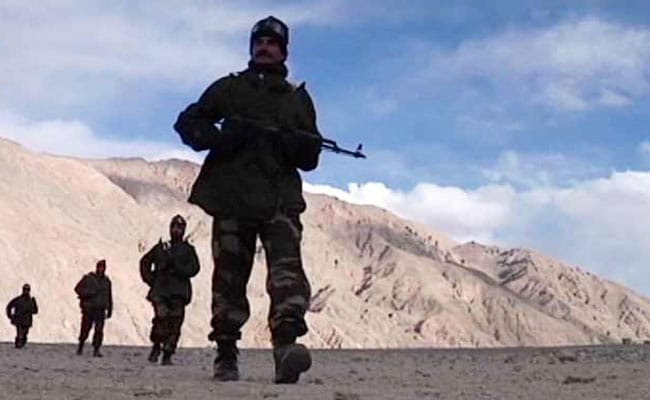
However, it is not something for India to be happy about because it does not seek conflict anywhere along its borders and is committed to its economic growth and betterment of lives of its people. China too has to realise that in its relationships it cannot expect nations to acquiesce to its strategic desire at the cost of their self-respect.
Such politico-military-strategic situations cannot simply be glossed over without at least a brief commentary on the military aspects. The most noticeable thing this time is China’s attempt to employ hybrid aspects with psychological warfare at the core. Its aim is to create fear in the minds of the Indian leadership and paint a scenario of India’s helplessness in comparison to China’s economic and military strength. There hasn’t been any subtlety about it reflecting a crass attitude in the hope that India will back off.
It is a misnomer for China to think that it can walk all over India’s armed forces. What it is achieving in the bargain is the buying of new generation enmity, which will last into the future. While it may not be correct to assume that we have the fullest support of the international community yet China-Pakistan collusion to target India is not going to be viewed very positively either.
A long standoff stretching into winter, which analysts are speculating about, is not in anyone’s interest as a single spark can anytime put a full border on fire. Bhutan, which has unfortunately been caught between the interests of its giant neighbours, could actually hold the key to a potential dilution of tension.
Considering that mutual withdrawal is being considered as a potential Indian success, Bhutan’s request to India to withdraw its troops alongside stoppage of all construction activity by the PLA with a follow up of a resumption in China-Bhutan talks could be a face saver for all. Bhutan could insist on subsequent PLA vacation of Doklam and return to status quo ante for the talks to resume.
The important thing is that with this incident the next may not be too far away. There is no alternative for India but to do more than lip service to its dire need for better infrastructure and military capability for a two-front conflict. Doklam will not be the last time it will face intimidation.
( Inputs from Swarajya by Syed Ata Hasnain, a former GOC of India’s Srinagar based 15 Corps, now associated with Vivekanand International Foundation and the Institute for Peace and Conflict Studies. )